Dimension Property Catalog
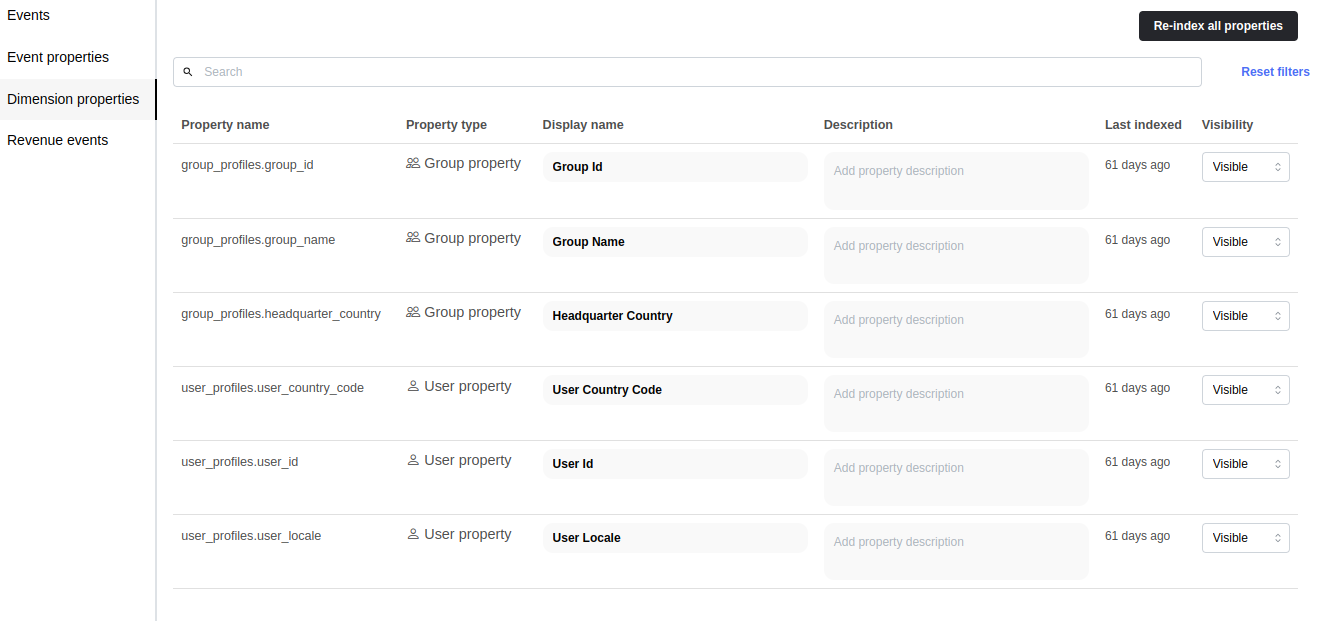
The dimension property catalog helps you track and document the properties from all configured dimension tables.
Dimension properties are added and removed automatically when you add or remove a dimension table. You cannot create or remove them manually.
Use cases
Maintaining the display name and description fields of the user property records can help you:
- map technical abbreviations and raw property names to human-readable labels
- explain the meaning of a user property with a description
All features
Browsing dimension properties in the catalog
The Dimension Properties tab on the catalog page lists every dimension property of the selected workspace, grouped under the dimension table it comes from. Click a table row to collapse or expand its properties.
Each dimension table row shows:
- the table name in
<schema>.<table name>format - the entity the table describes, for example Users or Groups. Change it for the whole table on the dimension tables page.
- how many properties the table has
- a checkbox that shows or hides every property of the table at once. It appears half-selected when only some of the properties are visible.
Each property row shows:
- Source: The raw column name of the property. The column names of nested data structures (e.g., struct, JSON) use the
<column name>.<field key>format. - Display name: The dimension property is referenced with this value on the Insights page, in charts, dashboards and tooltips.
- Description: The property description can help you find the right property when browsing the Insights page. Click the field to expand it while you type.
- Visible: Controls whether the property is offered on the Insights page. Clear the checkbox and the property is no longer listed in any dropdown. Insights that already use the property keep working, but they cannot be recreated. The analytics agent leaves hidden properties out of its suggestions too. It still uses one you name and says it is hidden; before using a hidden property you did not name, it asks you first.
- an info icon showing the elapsed time since the property was last found while checking the dimension table for new properties
- a Show values button, described below
Use the search box to filter properties by display name, description or raw column name, the table dropdown to jump to one dimension table, and the entity dropdown to narrow the list to a single entity. Matching properties stay expanded while you search. Click any column header to sort by it, and click it again to reverse the order.
The whole catalog is loaded at once, so there is no pagination to page through.
Updating display name, description
To change the display name or description of a dimension property, click the field and enter the desired value. The catalog is updated when you leave the field or press Enter. Press Escape to discard what you typed. Display names must be unique within a workspace.
Re-indexing dimension properties
Dimension tables are indexed once you have configured them. If you have added or removed properties, you may not see the new properties or you may still see the removed ones.
To re-index every dimension table, open the actions menu in the top right corner and choose Re-index all properties. To re-index a single table, open the menu on its table row and choose Re-index table. Either way one indexing task is queued per dimension table, exactly as if you had re-indexed the tables from the dimension tables page. You are notified that indexing started; the properties in the catalog update once the tasks finish.
Removing a dimension table
Open the menu on a table row and choose Remove table to remove that dimension table, and all of its properties, from the workspace. You are asked to confirm first. This requires the workspace management permission.
Reviewing dimension property values
To inspect the distinct values currently stored for a dimension property, click the Show values button in the row of the property. The dialog lists the values that the Insights page will offer as filter options. Click Reset values to re-discover the values from the warehouse if the table contents have changed, or change Property data type if the property was detected as the wrong type.